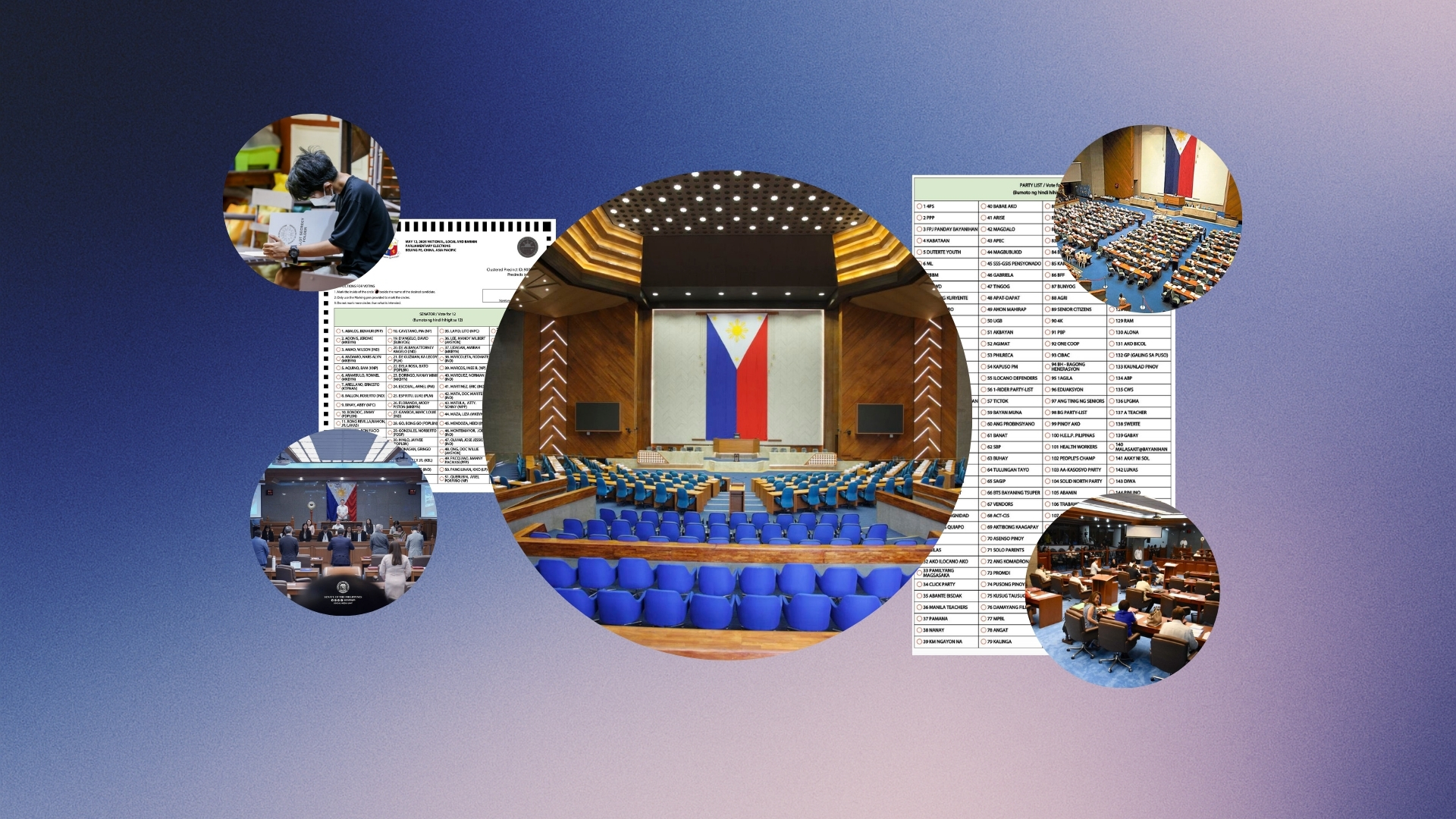
Political participation extends beyond the right to vote. It includes the ability to register as a candidate, be elected, and hold public office. These rights are exercised through genuine periodic elections. In this context, electoral competition is generally understood as the conflict between parties and candidates to win voter support. Electoral competition is positively correlated with the accountability of elective public officials. [Marín et al., 2021]. Accountability is enhanced as competition constrains public officials from serving their interests and improves the provision of public goods and services.
The 1987 Constitution declares the State policy to guarantee equal access to opportunities for public service, and prohibit political dynasties as may be defined by law [Art. II, Sec. 26]. The framers envisioned the prohibition as a means of broadening access, particularly for competent and promising but poor candidates. As a policy, the prohibition is anchored on the prevailing political, social, and economic inequalities—particularly the advantage of incumbent officials, the perpetuation of power within family members in office, and the high cost of electoral campaigns—which worked against poor candidates. The prohibition, however, is not self-executing and requires enabling legislation.
The party-list system of representation in the House of Representatives was an innovation intended to allow the broadest participation of sectoral organizations. These organizations are marginalized and underrepresented, and cannot win elections under ordinary circumstances due to the lack of well-defined constituencies. In its final form, the framers adopted an open party-list system permitting national, regional, and sectoral parties and organizations to compete for seats. Sectoral organizations were, however, provided reserved seats for three consecutive terms in recognition of their relative weakness in the political sphere [1987 Constitution, Art. VI, Sec. 5]. This transitional mechanism was designed to allow these organizations to build capacity and eventually compete on equal footing, both within the party-list system and in general electoral contests.
Legislative stagnation and institutional shift
Despite the constitutional mandate, no anti-political dynasty law has been enacted. Since 2004, more than 40 anti-political dynasty bills have been filed [Gacayan, 2021], yet Congress has repeatedly failed to pass enabling legislation. By contrast, the Party-list System Act was enacted in 1995.
The implementation of the party-list system, however, has been marked by legal and institutional challenges. The 1998 elections, which first allowed voting under the party-list system, faced low voter turnout, inefficient Comelec processes [Tangkia et al., 2001], and a legal controversy on seat computation [Veterans Federation Party et al. v. Comelec et al.]. Subsequent elections continued to generate litigation.
In 2001, the Supreme Court clarified guidelines for registration of parties or organizations in favor of marginalized and underrepresented groups [Ang Bagong Bayani-OFW Labor Party v. Ang Bagong Bayani-OFW Labor Party Go! Go! Philippines et al.]. In 2009, the Court revised the formula for seat computation earlier declared in Veterans [BANAT v. Comelec et al.]. In 2013, the Court likewise reversed the registration parameters previously declared in Ang Bagong Bayani-OFW Labor Party to include national and regional parties and organizations not classified as marginalized and underrepresented [Atong Paglaum, Inc. v. Comelec].
Low electoral competition and dynastic dominance
While the measurement of electoral competition continues to evolve, it generally considers volatility and vote switching, as well as availability—or voters’ openness to alternative parties or candidates [Wagner et al., 2023]. The Philippines suffers from low electoral competition. The dominance of political dynasties and manipulation of the party-list system have contributed to the deficit of real choices among voters [ANFREL, 2025].
Empirical data underscores this trend. The incidence of political dynasties has steadily increased since the ratification of the 1987 Constitution. For example, 40% of provincial governors in 1988, 57% in 2004, 80% in 2019 [ASOG Working Paper 19-013], and 87% in 2024 [PCIJ Report, 8 December 2024] are from political dynasties. Similar patterns are observed in Congress. Around 39% of congressional representatives in 1992, 48% in 2004, and 67% in 2009 belong to dynasties. In the 2022 elections, 80% of district congressional representatives were linked to dynasties [PCIJ Report, 26 October 2024]. Notably, even the party-list system has not been immune to dynasties—44% of party-list representatives belong to dynasties in 2022 [UP sa Halalan, 10 May 2025]. This figure increased to 50% after the 2025 elections [PCIJ Report, 12 March 2026].
Dynastic concentration and development outcomes
The concentration of political dynasties generates favorable conditions for corruption and constrains citizen action for accountability. In these conditions, political dynasties are associated with poor development outcomes and poverty [Mendoza et al., 2022]. In 2025, the Philippines scored 32 out of 100 and ranked 120 out of 182 countries in the Corruption Perceptions Index. Recent controversies illustrate these risks. As allegations involving the misappropriation of public funds allocated for flood control projects intended to mitigate typhoon-induced disasters surfaced, an estimated total amount of PHP118.5 Billion (USD1.99 Billion) is subject to recovery [Gulf News Report, 2025].
The flood control controversy led to the declaration of anti-political dynasty and party-list system reforms as priority legislative measures to be enacted by June 2026. However, the prevalence of political dynasties, electoral competition and accountability issues, and their negative effects on development and poverty have long been raised.
Civil society organizations (CSOs) and business groups are consistent on the need for genuine anti-political dynasty reform, noting minor differences among recommended provisions. Despite this broad consensus, Congress has not only failed to enact an enabling law but also resisted genuine reform provisions.
Deliberations on two anti-political dynasty bills remain incomplete. Senate Bill 1901 leans closer to the reform-oriented recommendations. SB 1901 includes provisions: 1) prohibiting simultaneous (during the same term) and successive (from one term to the next) holding of office [Sec. 4], 2) restricting family members to one national position and one local position, with the party-list system as a special regime that further restricts national and local positions [Sec. 5], and 3) comprehensive implementation mechanisms through administrative withdrawal of candidacy [Sec. 6] and quasi-judicial cancellation of certificate of candidacy [Sec. 7], as well as judicial quo warranto [Sec. 12] and election offense [Sec. 14], as remedies.
By contrast, House Bill 6771 adopts a significantly narrower approach. The bill: 1) covers only the simultaneous holding of office [Sec. 5], 2) allows family members to a national position, several local provincial positions as long as the positions are not within the same province, several local city or municipal positions as long as the positions are not within the same city or municipality, several local barangay positions as long as the positions are not within the same barangay, several district representative seats in Congress [Sec. 5], 3) does not cover the party-list system, and 4) provides one administrative remedy with delayed effect only before assumption of office [Sec. 7].
The party-list system reform has moved at a slower pace. While the Senate held a committee hearing on related bills, similar action in the House remains pending. Aside from anti-political dynasty provisions, genuine reform in the party-list system is envisioned through allocation of seats between national/regional parties and sectoral organizations, and strict nomination in favor of members of the marginalized and underrepresented sectors for sectoral organizations. These proposals seek to achieve the spirit of broadest participation of the marginalized sectors.
Current circumstances raise doubts on the declaration of the anti-political dynasty and party-list reforms as priority legislative measures. At the first level, there is the question of whether these laws will be enacted, as promised. At the second level, the more important question is whether these laws, if enacted, would reflect genuine reform provisions in response to the protracted and deepening issues of low electoral competition and accountability of officials, and underdevelopment and poverty.
Close to four decades after the 1987 Constitution, the Philippines continues to struggle with the gap between formal guarantees of broad political participation and the realities of limited electoral competition. The persistence of political dynasties and manipulation of the party-list system demonstrate the shortcomings of the system in achieving the spirit behind these constitutional provisions.
Ultimately, the Filipino people face difficult questions—not only whether these measures will be enacted, but more importantly whether they will be designed and implemented to redistribute political power. Without this, broad political participation remains a vision reflected on paper, not seen nor lived in reality.

The first and only non-partisan, nationwide network of lawyers, law students, paralegals, and grassroots volunteers engaged to do election work
© Lente, Inc. 2020

